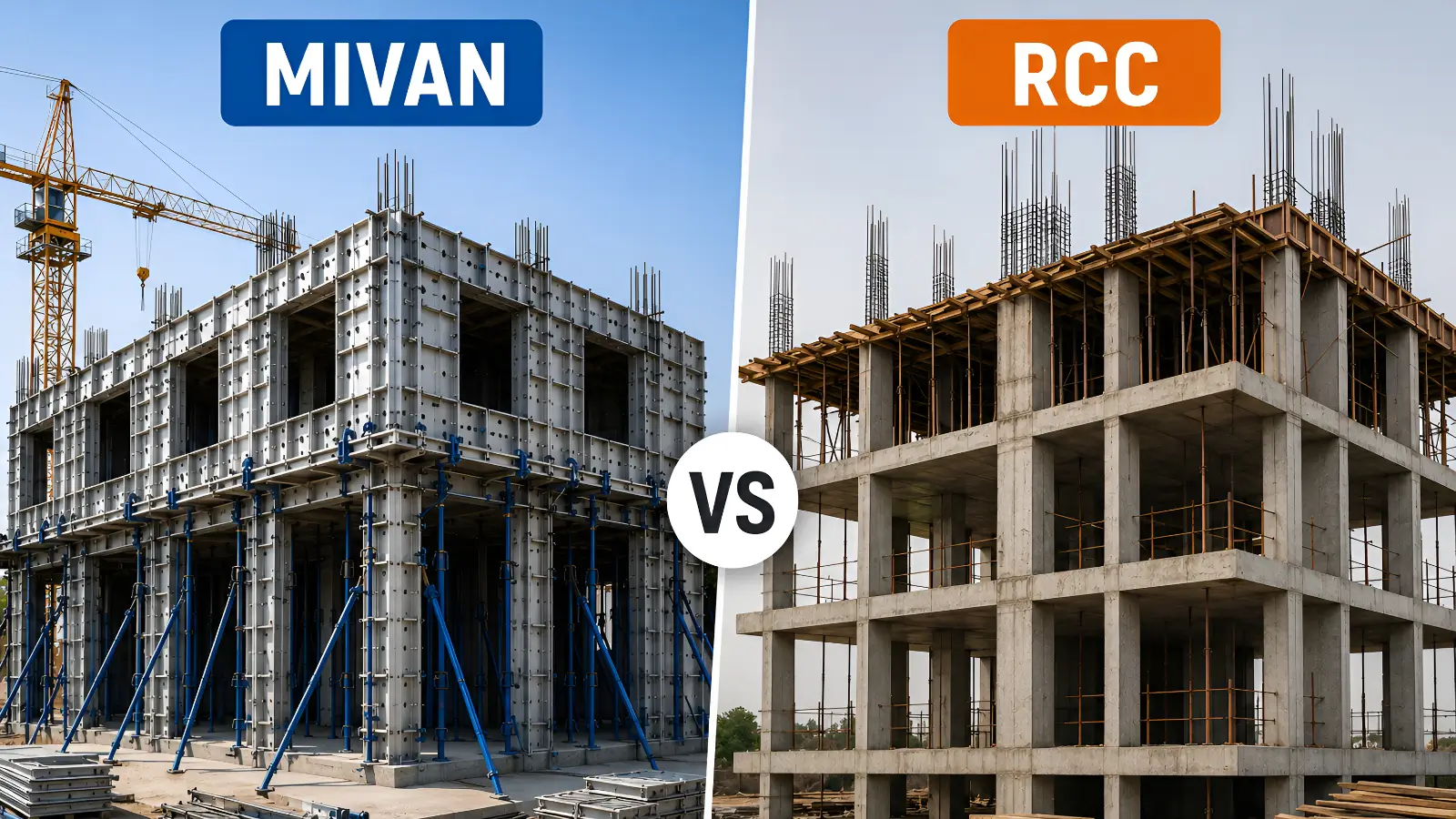
Is Mivan better for high-rise luxury apartments? A look at Mivan, the Lodha Sadahalli construction approach (an RCC frame to IS codes), and what to verify.
Construction method is one of the more technical questions a buyer asks, and one where it pays to be precise. Searches for the Lodha Sadahalli Mivan construction progress update reflect genuine interest in how the homes are built and how robustly they will last. We have set out what Mivan construction is, the project’s actual specified approach, and how the two relate — with a clear note that the definitive method is the one in the official specification. The aim is to explain the technology fairly while being accurate about what this project specifies, so you can ask the right questions.
The Question Behind the Search
It helps to address the question directly. Buyers researching the project’s construction generally want to know two things: what building method the project uses, and how sound it is. On the first point, the project specifies a reinforced cement concrete (RCC) framed structure built to Indian Standard codes, rather than being described as a Mivan project — so the most accurate answer is to set out that actual approach. On the second, the relevant assurance comes from the engineering standards the structure meets. Both are best confirmed from the official specification, which is the authoritative source for the construction method.
What Mivan Construction Is
Since the term comes up often, it is worth explaining. Mivan is an aluminium formwork system, a construction technique in which walls and slabs are cast using reusable aluminium moulds, producing a monolithic concrete structure. It is widely used in high-rise residential construction, particularly where many similar units are built at speed. The technique is a method of forming concrete rather than a different material, and it has become common in large projects. Understanding what Mivan is helps a buyer interpret the term when it appears in marketing or discussion, and distinguish it from the question of what a specific project actually specifies.
The Benefits of Mivan
The technique has genuine advantages where it is used. The Mivan technology benefits for residential towers often cited include speed of construction, consistent quality through repeatable moulds, strong structural integrity from monolithic casting, and good resistance to water seepage. These qualities have made it popular for large-scale residential developments with many repeating units. It is, however, one of several sound ways to build well, and a high-quality structure can be achieved through more than one method. The presence or absence of any single technique matters less than whether the chosen method is executed to high engineering standards, which is the real measure of structural quality.
The Project’s Actual Construction Approach
Here is the project’s specified method, stated plainly. Lodha Sadahalli specifies a reinforced cement concrete framed structure designed to Indian Standard codes, engineered for the applicable seismic considerations of the region. This is a well-established, dependable approach to building, used widely in quality construction, and it is the method set out for this project rather than Mivan. A buyer should therefore understand the structure as an RCC frame built to recognised standards, and confirm the full structural specification from the official documents. Being accurate about the actual method is more useful than assuming a particular technique, and the official specification is the place to verify it.
Earthquake Resistance and Standards
Structural safety rests on engineering standards. The earthquake resistant apartments Bangalore buyers value derive their resilience from being designed to the relevant Indian Standard seismic codes for the zone in which they sit, and the project’s RCC structure is specified to those codes, with Bangalore falling in a moderate seismic zone. Compliance with these standards is what provides structural assurance, regardless of the specific forming technique used. For a buyer, the key question is whether a structure is engineered to the applicable codes — which this project’s specification addresses — rather than whether it uses any particular construction system. The official specification confirms the engineering detail.
Mivan Versus RCC: What Matters to a Buyer
The practical comparison is reassuring. Both Mivan-formed structures and well-built RCC framed structures can deliver excellent, durable, safe homes when executed to high standards, so the choice between methods is less important to a buyer than the quality of engineering and execution. What matters is that the structure is designed to the applicable codes, built by a capable developer, and confirmed in the specification. Rather than favouring one technique on principle, a buyer is better served by checking the actual specified method and the standards it meets. Our Lodha construction quality piece covers the developer’s approach to building well.
Confirming the Construction Details
Verification is the sensible final step. For an accurate construction quality update Lodha Sadahalli 2026 buyers can rely on, confirm the structural specification, the codes it is designed to, and the materials from the official documents, and bear in mind that as a pre-launch project, physical construction progress follows the launch. The Lodha Sadahalli Mivan construction progress update is therefore best understood as the project’s specified approach to be verified against the official specification, rather than a report of work already on site. Our why Lodha uses its construction technology and possession pieces add context, and our advisory team can share the specification.
Related reading: Case for Living Just Before the Airport Toll on Bellary Road.
FAQs
Does Lodha Sadahalli use Mivan construction? The project specifies a reinforced cement concrete (RCC) framed structure built to Indian Standard codes, rather than being described as a Mivan project. Confirm the construction method from the official specification.
What is Mivan construction? An aluminium formwork system in which walls and slabs are cast using reusable aluminium moulds, producing a monolithic concrete structure. It is a method of forming concrete, widely used in high-rise residential building.
Is an RCC frame a good way to build? Yes. A well-built RCC framed structure designed to recognised codes is a sound, established approach used widely in quality construction, capable of delivering durable, safe homes.
Are the apartments earthquake resistant? The structure is specified to the relevant Indian Standard seismic codes for the zone, with Bangalore in a moderate seismic zone. Compliance with these codes provides the structural assurance.
Is Mivan better than RCC? Both can deliver excellent, durable, safe homes when executed to high standards. The quality of engineering and execution matters more to a buyer than the specific forming technique.
How do I confirm the construction details? From the official specification, which sets out the structural method, the codes it meets, and the materials. As a pre-launch project, physical construction progress follows the launch.
Continue Reading
For the developer’s approach to building, read our Lodha construction quality piece, and for the technology context, our why Lodha uses its construction technology guide. On handover, see our possession piece.
For the specification, visit the specifications page. To see the structural specification, contact our advisory team.
Related Articles

Lodha Sadahalli Reviews: How to Judge a Pre-Launch Project
Lodha Sadahalli reviews and expert opinions in 2026 — what you can assess at the pre-launch stage, how to read early feedback, and how to form an honest view.

Lodha Sadahalli Launch and EOI: How Booking Works
The Lodha Sadahalli EOI and launch date for 2026 — where the project is in its cycle, how the EOI works, the booking process, and what to confirm. Read on

Lodha Sadahalli Cost Sheet: Full Pricing by Configuration
The Lodha Sadahalli cost sheet for 2026 — a detailed breakdown of prices by configuration, the per-sft rate, and the charges beyond the base price. Read on
Lodha Sadahalli RERA Status: Where the Approvals Stand
The Lodha Sadahalli RERA approval status and timeline — where registration stands, what it confirms, the planning position, and what to check before booking.