
How Lodha approaches RERA compliance and legal transparency — a developer's obligations, this project's pending RERA status, and how to verify it yourself.
Legal soundness is the floor beneath every other quality a home can offer. Understanding how Lodha ensures RERA compliance legal transparency matters because no amount of design or specification compensates for a project on shaky legal ground. We have set out what RERA is, what it obliges a developer to do, how a disciplined developer approaches it, and — candidly — where this particular project stands today and how you can verify all of it yourself. This is general information rather than legal advice, and the right step at every stage is to confirm the documents at source.
What RERA Is and Why It Protects You
RERA — the Real Estate (Regulation and Development) Act — exists to protect buyers. It requires developers to register projects before marketing or selling them, to disclose project details and timelines, to use buyer funds appropriately, and to be held accountable for delivery. In Karnataka the authority is K-RERA, and registration is a legal precondition for sale, not an optional badge. For a buyer, the framework converts a once-opaque transaction into one with disclosure and recourse, which is why a project’s RERA position should be among the very first things you check.
A Developer’s RERA Obligations
The Act places clear duties on the builder. The standard of builder legal approval transparency India now expects includes registering the project with the authority, publishing mandated details, keeping a defined share of buyer funds in a dedicated account for the project, and adhering to the committed timeline and specifications. These obligations are designed to align a developer’s conduct with buyers’ interests and to make departures visible. A developer that takes them seriously treats compliance as a matter of routine discipline rather than a hurdle, which is exactly the posture a buyer should look for.
How a Disciplined Developer Approaches Compliance
Compliance is as much culture as paperwork. A sound Lodha RERA adherence process projects follow rests on treating registration, disclosure, and fund management as standard practice across the portfolio, supported by the systems and accountability that come with operating as a listed company. Macrotech Developers Ltd answers to regulators and shareholders, which reinforces the incentive to keep projects compliant and well documented. For a buyer, a developer with that institutional discipline is more likely to handle the legal side properly than one without the same scrutiny, though it remains your task to verify the specifics of any single project.
Proactive Registration and Disclosure
The better approach treats transparency as an asset, not a chore. A Lodha proactive RERA registration approach means registering projects as required and making the relevant information available to buyers, so that the legal position is clear rather than obscure. Proactive disclosure works in a developer’s favour too: it builds the trust that sells homes and protects reputation. When a developer is open with approvals, registrations, and documentation, it signals confidence in its own position — and it makes your diligence easier, because the information you need is offered rather than withheld.
Where This Project Stands Today
Here candour is essential. This project is at the pre-launch stage, and its RERA registration is pending — expected to be announced at launch. That means a buyer should not treat the project as RERA-registered until the registration is issued, and should verify it directly on the K-RERA portal once available. Marketing materials at the pre-launch stage are not a substitute for registration, and commitments become contractual at the formal launch and agreement. Our RERA status piece details the current position, and we would always rather you confirm it than assume it.
Other Approvals in Process
RERA is not the only clearance that matters. For a project on the airport belt, planning sanction falls under the relevant area planning authority, and environmental clearances under the state pollution control board, among others — and for this project these approvals are in process rather than complete. A buyer should ask which approvals are in place and which are pending at the time of booking, and verify them rather than relying on assurances. Treating the full set of clearances as items to confirm, not to take on trust, is simply prudent diligence on any pre-launch purchase.
Putting Legal Diligence into Practice
Knowing the framework is one thing; using it is another. To satisfy yourself about how Lodha ensures RERA compliance legal transparency for this specific project, treat the legal checks as a sequence to complete before you commit: confirm the RERA registration on the K-RERA portal once it is issued, obtain and read the title documents and the encumbrance certificate, ask which approvals are in place and which remain in process, and review the agreement to sell with care. Where a developer is listed, as Lodha is, add its public disclosures to your reading. The point of this sequence is to replace assurance with evidence — to base your confidence on documents you have seen rather than statements you have been given. It is unglamorous work, but it is the part of a purchase that most protects your money, and a reputable developer will help rather than hinder it.
How to Verify Compliance Yourself
Confirmation is straightforward once you know where to look. Check the project’s RERA registration on the K-RERA portal once it is issued; ask the developer for copies of approvals, the title documents, and the encumbrance certificate; and read the agreement to sell carefully before committing. Pair this with the developer’s public disclosures, which a listed company like Macrotech provides. Legal diligence is not glamorous, but it is the part of buying a home that most protects you, and a reputable developer welcomes it. Our advisory team can help you locate and read the relevant documents.
Related reading: How Startup Wealth Is Creating New Luxury Home Buyers.
FAQs
What is RERA and why does it matter? The Real Estate (Regulation and Development) Act requires developers to register projects, disclose details, manage buyer funds properly, and be accountable for delivery. In Karnataka the authority is K-RERA, and registration is a legal precondition for sale.
Is this project RERA-registered? Its RERA registration is pending and expected to be announced at launch. Do not treat the project as registered until then, and verify the registration on the K-RERA portal once issued.
What are a developer’s RERA obligations? Registering the project, publishing mandated details, keeping a defined share of buyer funds in a dedicated account, and adhering to the committed timeline and specifications.
How does being listed support compliance? As Macrotech Developers Ltd, the developer answers to regulators and shareholders, which reinforces the discipline and documentation behind keeping projects compliant.
What other approvals should I check? Planning sanction from the relevant area planning authority and environmental clearances, among others — for this project these are in process, so confirm their status at booking.
How do I verify a project’s legal standing? Check RERA on the K-RERA portal once issued, ask for approvals, title, and the encumbrance certificate, read the agreement carefully, and review the developer’s public disclosures.
Continue Reading
For this project’s legal position in detail, read our RERA status piece, and on trusting commitments, our can you trust pre-launch promises guide. For third-party signals, see our awards and certifications piece.
For pricing and documents, see the Price page. To review the paperwork, contact our advisory team. This article is general information, not legal advice.
Related Articles

Lodha Sadahalli Reviews: How to Judge a Pre-Launch Project
Lodha Sadahalli reviews and expert opinions in 2026 — what you can assess at the pre-launch stage, how to read early feedback, and how to form an honest view.

Lodha Sadahalli Launch and EOI: How Booking Works
The Lodha Sadahalli EOI and launch date for 2026 — where the project is in its cycle, how the EOI works, the booking process, and what to confirm. Read on
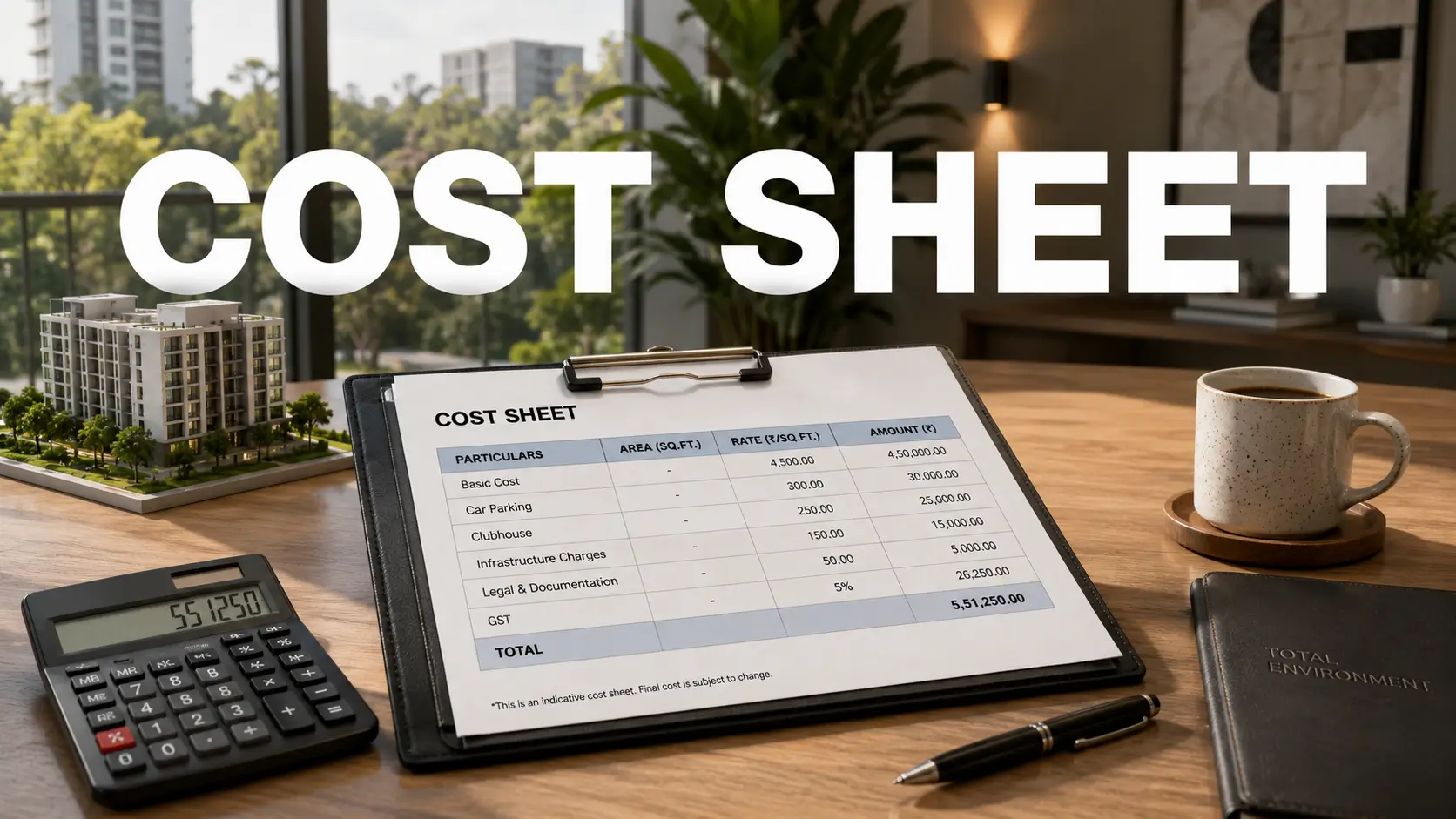
Lodha Sadahalli Cost Sheet: Full Pricing by Configuration
The Lodha Sadahalli cost sheet for 2026 — a detailed breakdown of prices by configuration, the per-sft rate, and the charges beyond the base price. Read on
Lodha Sadahalli RERA Status: Where the Approvals Stand
The Lodha Sadahalli RERA approval status and timeline — where registration stands, what it confirms, the planning position, and what to check before booking.