
What Builder awards and certifications mean for buyer assurance — the difference between recognition and certification, and how to read them. Read the.
Awards and certifications fill developer brochures, but few buyers stop to ask what they actually prove. Read well, the Builder awards certifications buyer assurance meaning they carry can be a useful signal; read carelessly, they are just decoration. We have set out the difference between an award and a certification, which of them genuinely protect you, and how to interpret the rest with a healthy, practical scepticism — so you can give them the weight they deserve and no more when judging a developer and a project.
Why Awards and Certifications Matter to a Buyer
At heart, both are forms of third-party validation — someone other than the developer vouching for some aspect of its work. That outside view has value precisely because it is not the developer’s own marketing, and in an industry where buyers commit large sums to projects not yet built, credible external signals help. The key word is credible: the usefulness of any award or certificate depends entirely on who issued it, what they assessed, and how rigorous that assessment was. Learning to ask those questions turns a logo on a brochure into real information.
The Two Kinds: Recognition and Certification
It helps to separate the two, because they prove different things. An award is recognition — an industry body, publication, or jury judging a developer or project notable for design, sales, or reputation; it reflects standing and perception. A certification is a formal assessment against a defined standard — a green-building rating, a quality-management system, or a regulatory registration — and it tends to carry harder, more verifiable weight. Both can be informative, but a certification against a known standard usually tells you more about substance than an award does about reputation.
Industry Recognition and a Listed Developer
Recognition accrues to developers with scale and standing. The Lodha real estate industry recognition India has accumulated over decades reflects its position as one of the country’s larger and longer-established developers, now operating as a listed company. The listing itself is a form of assurance that no award can match: as Macrotech Developers Ltd, it reports audited financials and discloses to regulators, giving buyers a verifiable view of the company behind the project. When weighing recognition, that documented accountability deserves at least as much attention as any trophy.
Certifications That Affect You Directly
Some certifications matter to a buyer in concrete ways. The builder certifications importance home buying decision rests on is greatest for the ones that touch your home directly — RERA registration, which is a legal requirement before sale and the most important of all; green-building ratings, which affect running costs and comfort; and quality-management standards, which speak to process discipline. These are worth checking and verifying, because each has a real bearing on your purchase. A developer’s general accolades are secondary to whether the specific project carries the registrations and ratings that protect and benefit you.
Green Certification in Practice
One certification shows its value every month. This project is designed to be IGBC Gold-aligned, a green-building standard that translates into lower energy and water use, better indoor comfort, and reduced running costs — benefits you feel in the utility bills and the living experience, not just on a plaque. Green ratings are among the most practical certifications for a buyer precisely because their effects are tangible and ongoing. When a project pursues a recognised green standard, it signals both environmental intent and an attention to long-term cost that serves residents well.
How to Read Awards Critically
A little scepticism protects you. The phrase award winning developers Bangalore appears widely in property marketing, and not every award is equal — some are rigorous and respected, others closer to paid promotion. The sensible response is to ask who gave the award, on what basis, and how selective it was, and to weight independent, well-established recognition over obscure or self-styled honours. Awards are best treated as a soft, supporting signal rather than proof, sitting well below verifiable certifications and a documented delivery record in your assessment.
Where Awards Sit in Your Decision
It is worth placing recognition correctly in the order of things that matter. The Builder awards certifications buyer assurance meaning provides should sit below the hard evidence — a documented delivery record, verifiable approvals, and the quality you see on a site visit — and above very little else. In other words, awards and even certifications are supporting signals, useful for confirming a picture but never a substitute for it. A buyer who leads with the trophies and skips the title search has the order exactly backwards. The sensible sequence is to confirm the legal and delivery fundamentals first, treat green and quality certifications as meaningful evidence on running costs and process, and read industry awards last and most sceptically. Handled in that order, recognition adds useful colour to a decision built on firmer ground, rather than standing in for the diligence that actually protects you.
Verifying for Yourself
As with everything in due diligence, confirm rather than assume. Check RERA registration on the relevant state portal once issued, ask to see green-building and quality certificates, and read the developer’s public disclosures if it is listed, as Lodha is. Pair all of this with the harder evidence — a delivery track record and visits to completed projects — and the awards fall into their proper, modest place. Our track record piece covers the delivery side, and our construction quality guide the build, while our advisory team can point you to the documents.
Related reading: How Bangalore’s Tech Industry Drives Home Demand in 2026.
FAQs
What is the difference between an award and a certification? An award is recognition of standing or merit by a body or jury; a certification is a formal assessment against a defined standard, such as a green rating or RERA registration. Certifications usually carry harder, more verifiable weight.
Which certifications matter most to a buyer? RERA registration first, as it is a legal requirement before sale, followed by green-building ratings that affect running costs, and quality-management standards that speak to process.
Is this project green-certified? It is designed to be IGBC Gold-aligned, which translates into lower energy and water use, better comfort, and reduced running costs over time.
Are property awards reliable? They vary. Some are rigorous and respected; others are closer to paid promotion. Ask who issued the award and on what basis, and treat it as a supporting signal rather than proof.
Does Lodha being listed add assurance? Yes. As Macrotech Developers Ltd it reports audited financials and discloses to regulators, giving a verifiable view of the company that no award can match.
How do I verify a developer’s certifications? Check RERA on the state portal once issued, ask to see green and quality certificates, and read the public disclosures of a listed developer, alongside site visits and the delivery record.
Continue Reading
For the delivery record behind the recognition, read our track record piece, and for the build standard, our construction quality guide. On the question of trusting promises, see can you trust pre-launch promises.
For the full project picture, visit the home page. To see the relevant documents, contact our advisory team.
Related Articles

Lodha Sadahalli Reviews: How to Judge a Pre-Launch Project
Lodha Sadahalli reviews and expert opinions in 2026 — what you can assess at the pre-launch stage, how to read early feedback, and how to form an honest view.

Lodha Sadahalli Launch and EOI: How Booking Works
The Lodha Sadahalli EOI and launch date for 2026 — where the project is in its cycle, how the EOI works, the booking process, and what to confirm. Read on
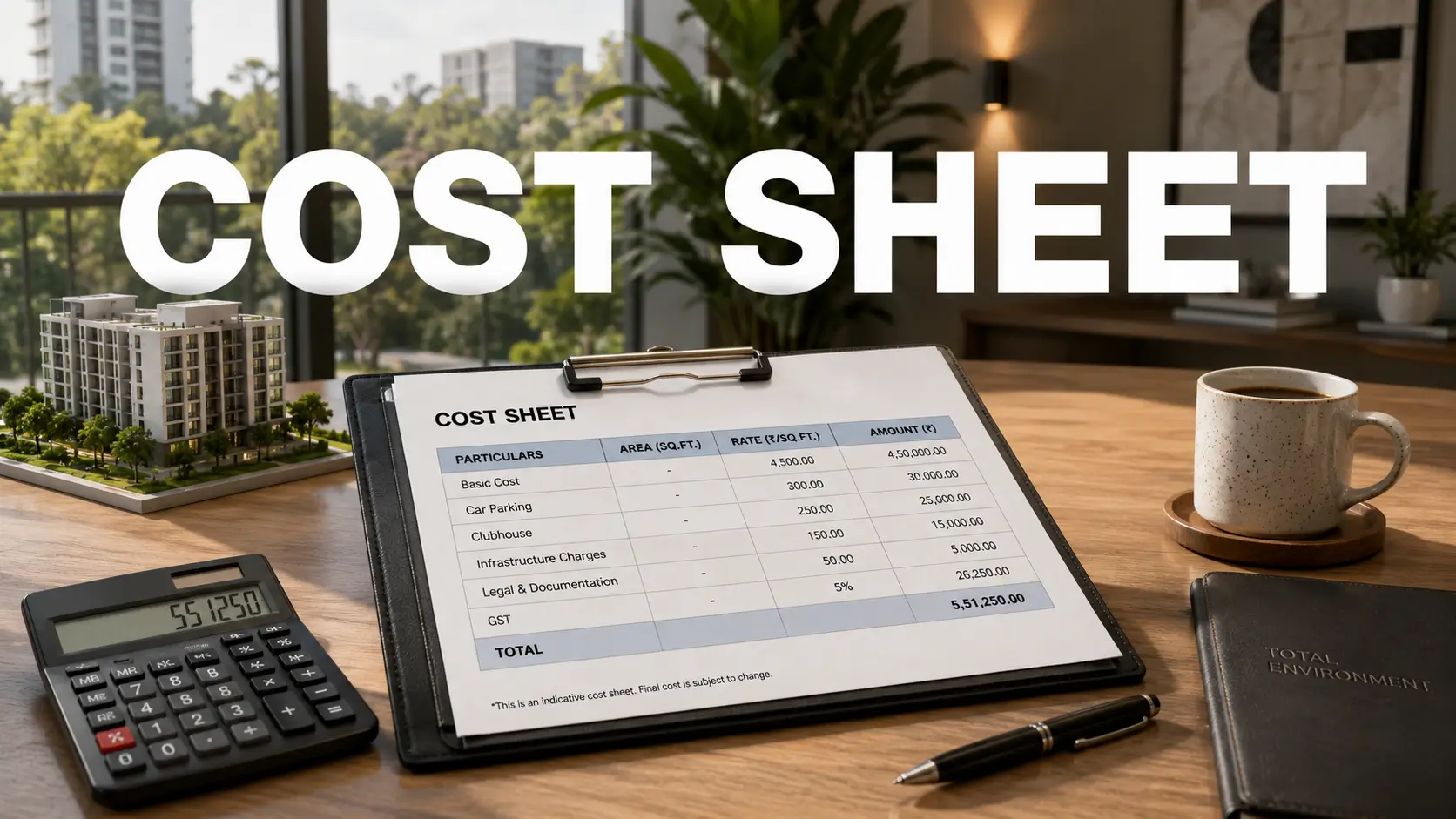
Lodha Sadahalli Cost Sheet: Full Pricing by Configuration
The Lodha Sadahalli cost sheet for 2026 — a detailed breakdown of prices by configuration, the per-sft rate, and the charges beyond the base price. Read on
Lodha Sadahalli RERA Status: Where the Approvals Stand
The Lodha Sadahalli RERA approval status and timeline — where registration stands, what it confirms, the planning position, and what to check before booking.