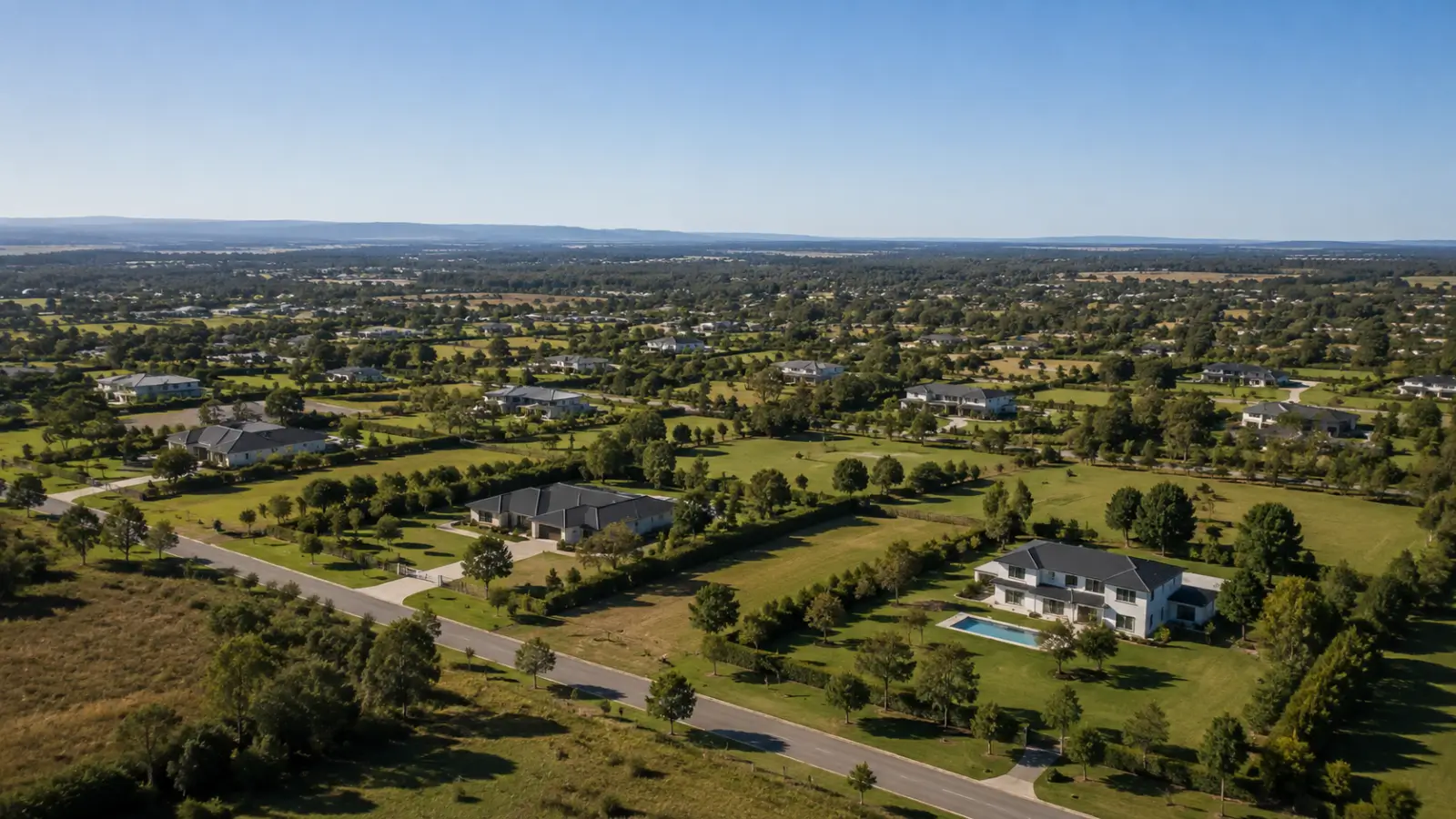
The benefits of low-density living in luxury apartments — space, privacy, light and fewer neighbours — and how the Sadahalli garden estate is designed around.
Two apartments can have identical floor plans and feel completely different to live in, and the reason is usually density. The benefits low density living 2 towers luxury apartments are known for — space, quiet, privacy, and light — come less from the home itself than from how few homes surround it. We have set out what low density actually changes about daily life, how the garden estate at Sadahalli approaches it, and why the idea matters for both comfort and value. The specific layout is best read from the master plan; what follows is why the principle is worth caring about in the first place.
What Low Density Actually Means
The term is used loosely, so it helps to be precise. Low density describes a project that places relatively few homes on a given area of land — fewer towers spread across larger grounds, more open space between buildings, and fewer apartments sharing each floor and each lobby. The opposite, high density, packs the maximum number of units onto a site to lower the cost per home. Density is the single design decision that most shapes how a place feels, because it governs how much space, light, and quiet each resident actually gets. Everything else follows from it.
Space, Light and Air
The first thing low density buys is room to breathe. With buildings set further apart and more land left open, homes receive more daylight, better cross-breezes, and longer, greener views rather than a neighbour’s window a few metres away. Common areas feel uncrowded, parking and lifts are less contested, and the whole environment is quieter because there are simply fewer people and vehicles in the same space. These are not luxuries you notice once and forget; they are conditions you live inside every day, and they shape mood and comfort in ways a floor plan alone never reveals.
Privacy by Design
Privacy is one of low density’s quietest gifts. Thoughtful privacy focused apartment design Sadahalli buyers value comes from placing homes so that windows and decks do not look straight into one another, spacing towers generously, and limiting how many front doors share a corridor. In a dense building, privacy is constantly negotiated — noise through walls, eyes across a narrow gap, crowds in shared spaces. In a low-density layout, privacy is built into the geometry, so it is the default rather than something residents must work to protect. For many buyers, that sense of a home being genuinely their own is the deciding factor.
Fewer Neighbours, Better Living
The count of homes per floor changes the daily experience more than buyers expect. The appeal of fewer units per floor luxury living Bangalore offers is practical: shorter waits for lifts, quieter lobbies, less noise transmitted between homes, and a greater sense of exclusivity and calm. Fewer homes sharing a core also tends to mean a more considered, better-finished common environment, since the building is not engineered to move large crowds. It is the difference between arriving home to a calm, private floor and threading through a busy, shared one — small each day, but substantial over the years you live there.
The Project’s Approach
At Sadahalli the design intent is unmistakably low-density. The estate is planned as a 70-acre garden development with roughly 85 percent of its land kept open as greenery and shared landscape — generous grounds, considerable space between buildings, and a setting closer to a private estate than a typical apartment complex. The hallmark of low-density design, of generous land per home and few towers across large grounds, is exactly what the benefits low density living 2 towers luxury apartments describe; the precise number of towers and units is best confirmed from the official master plan, but the intent of the layout leaves little doubt. Our master plan explained piece walks through the detail.
Low Density Across North Bangalore
The northern corridor is where this approach has room to flourish. A scarcity of low density residential projects North Bangalore can offer makes the genuinely spacious ones stand out, because land of meaningful size near the airport allows what built-up central districts cannot — large grounds, low coverage, and real distance between homes. As the area matures and land grows scarcer, projects that committed early to low density tend to hold their distinction, since the format is difficult and expensive to replicate later. That scarcity is part of what gives a spacious estate its lasting appeal in the corridor.
What It Means for Value and Daily Life
Low density is felt every day and reflected in price. A spacious, private, light-filled environment is more pleasant to live in, and that quality tends to support demand, rents, and resale, because buyers and tenants pay for homes that feel calm and uncrowded. The format also ages well, as the open space and privacy that defined it at launch remain difficult for denser neighbours to match. For a Sadahalli buyer, the low-density layout is both a daily comfort and a long-term asset. Our open space piece looks at the greenery side, and our advisory team can walk you through the master plan.
Related reading: How Office Growth in North Bangalore Drives Home Sales.
FAQs
What does low-density living mean? A project that places relatively few homes on a given area of land — fewer towers across larger grounds, more open space, and fewer apartments per floor — which shapes how spacious and quiet a place feels.
What are the benefits of low density? More daylight, better ventilation, greener views, quieter common areas, shorter lift waits, greater privacy, and a calmer overall environment than a high-density complex offers.
How does the Sadahalli estate approach density? It is planned as a 70-acre garden development with roughly 85 percent of its land kept open. The exact number of towers and units is best confirmed from the official master plan.
Does low density improve privacy? Yes. Spacing towers generously, placing homes so windows do not face one another, and limiting homes per corridor build privacy into the layout rather than leaving residents to protect it.
Why are low-density projects rarer in North Bangalore? Because they need land of meaningful size, which is scarce near the airport and harder to assemble as the area matures, making genuinely spacious estates stand out.
Does low density affect resale value? It tends to support demand, rents, and resale, since buyers and tenants pay for spacious, private, light-filled homes — and the format is difficult for denser neighbours to replicate.
Continue Reading
For the greenery side of the same idea, read our open space piece, and for the full layout, our master plan explained guide. On the wider setting, see our living near the airport toll piece.
For the master plan, visit the master plan page. To walk through the layout, contact our advisory team.
Related Articles

Lodha Sadahalli Reviews: How to Judge a Pre-Launch Project
Lodha Sadahalli reviews and expert opinions in 2026 — what you can assess at the pre-launch stage, how to read early feedback, and how to form an honest view.

Lodha Sadahalli Launch and EOI: How Booking Works
The Lodha Sadahalli EOI and launch date for 2026 — where the project is in its cycle, how the EOI works, the booking process, and what to confirm. Read on

Lodha Sadahalli Cost Sheet: Full Pricing by Configuration
The Lodha Sadahalli cost sheet for 2026 — a detailed breakdown of prices by configuration, the per-sft rate, and the charges beyond the base price. Read on

Lodha Sadahalli RERA Status: Where the Approvals Stand
The Lodha Sadahalli RERA approval status and timeline — where registration stands, what it confirms, the planning position, and what to check before booking.