3 BHK or 4 BHK at Lodha Sadahalli: Which Is the Better Investment?
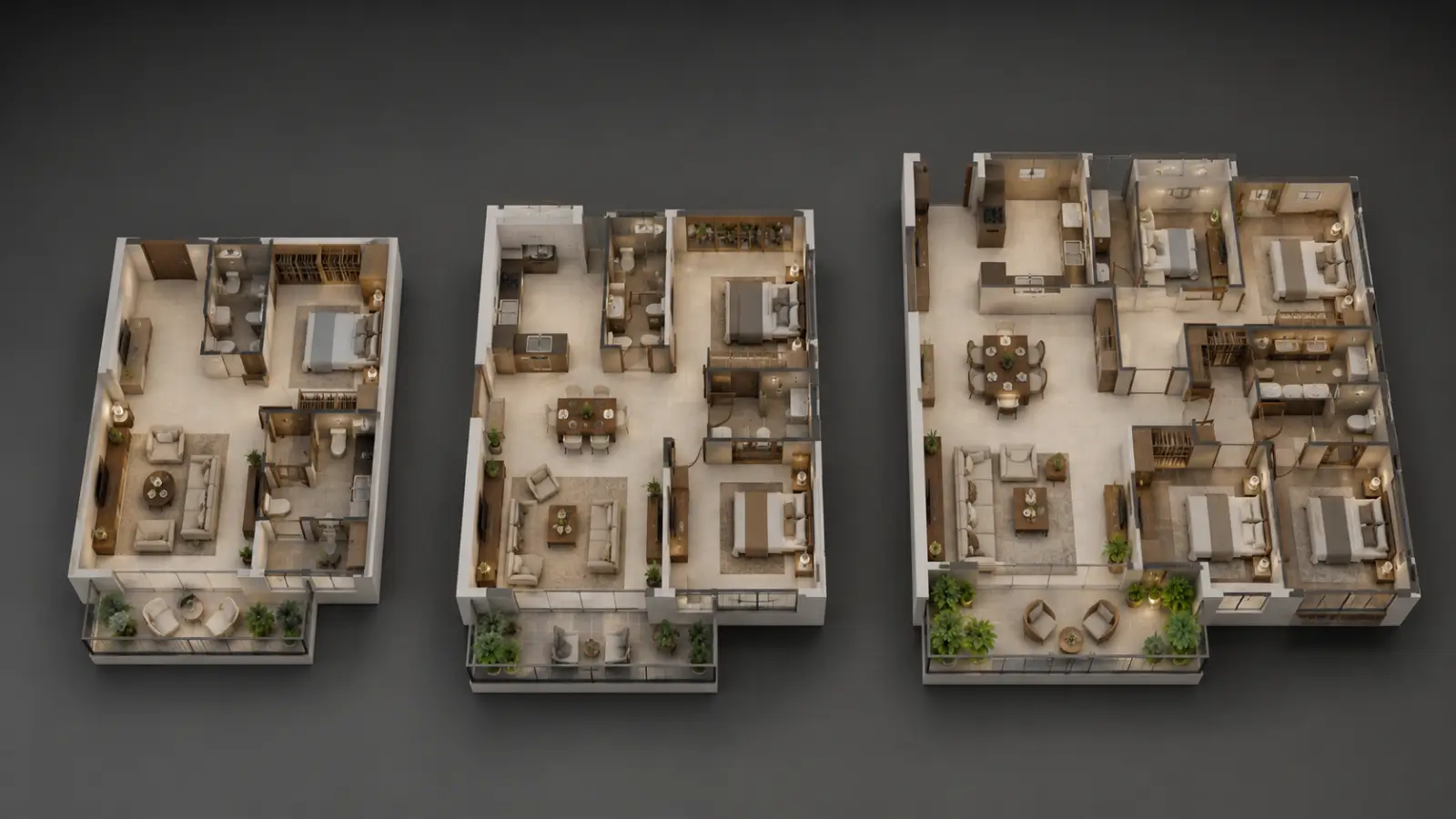
3 BHK vs 4 BHK investment ROI at Lodha Sadahalli — how the two compare on ticket size, rental yield, resale and appreciation. A guide for investors. Read on
For an investor, choosing a configuration is a numbers question before it is a lifestyle one. The 3 BHK vs 4 BHK investment ROI Lodha Sadahalli debate turns on ticket size, the depth of the buyer and tenant pool, rental yield, and resale, and the right answer depends on the kind of investor you are. We have weighed the two below, with the honest note that this is general information rather than financial advice. For the layouts themselves, our floor plan comparison covers the detail, and our rental yield piece the income side.
The Two Configurations as Investments
Begin with what each represents. The 3 BHK starts at Rs 3.10 Cr for 2,385 to 2,540 sft, while the 4 BHK starts at Rs 5.12 Cr for 3,925 to 4,060 sft — a materially larger home at a materially larger price. As investments they behave differently: the 3 BHK is the more liquid, broader-market asset, while the 4 BHK is the scarcer, premium asset with a narrower but wealthier audience. Identifying the best apartment type for investment North Bangalore offers starts with recognising that these are different bets, not better and worse versions of the same one.
Ticket Size and Liquidity
Liquidity often decides an investor’s experience. The 3 BHK’s lower ticket sits within reach of a far larger pool of buyers and tenants, which generally makes it quicker to let and quicker to sell when the time comes — a real advantage if you may need to exit. The 4 BHK’s higher ticket narrows the audience to a wealthier, smaller group, which can mean longer to transact, balanced by less competition among comparable units. For investors who value flexibility, the 3 BHK’s liquidity is a meaningful point in its favour.
Rental Yield Compared
Yield and ticket size tend to pull against each other. The question of which configuration gives better rental yield Sadahalli usually resolves in the 3 BHK’s favour on a percentage basis, because rent does not rise in strict proportion to price — a larger home rarely commands proportionally larger rent, so the yield on a 4 BHK often sits a little lower. The 4 BHK can still draw premium corporate and expatriate tenants near the airport, but for pure rental return the 3 BHK typically edges it. Our rental yield piece sets out the ranges.
Resale Value and the Buyer Pool
Resale is where the 4 BHK makes its case. The 4 BHK resale value compared to 3 BHK benefits from scarcity — large, well-designed homes in a low-density estate are harder to replicate and appeal strongly to end-users trading up, which can support firmer pricing and stronger appreciation per unit over a long hold. The trade-off is the smaller buyer pool at exit. The 3 BHK resells faster to a wider audience; the 4 BHK may resell for a stronger premium to a narrower one. Horizon and patience decide which matters more to you.
Appreciation Potential
Both should benefit from the corridor, with a nuance. Appreciation across the belt is driven by location and infrastructure that lift all configurations, but premium, scarce formats sometimes capture a larger share of it in a maturing luxury market, where buyers increasingly seek space and exclusivity. Against that, the larger absolute sum tied up in a 4 BHK concentrates more capital in a single asset. The 3 BHK spreads risk more thinly and could even be doubled up — two 3 BHKs rather than one 4 BHK — which some investors prefer for diversification within the same project.
Financing and Holding Costs by Configuration
Returns are shaped by what a home costs to own, not only what it earns. In the 3 BHK vs 4 BHK investment ROI Lodha Sadahalli comparison, the larger home means a larger loan, a larger EMI, and higher maintenance and statutory costs in absolute terms, all of which sit between the headline price and the net return. The 4 BHK ties up more capital in a single asset and can take longer to exit, so its holding costs run over a potentially longer selling period; the 3 BHK’s lower outgoings and faster liquidity ease that pressure. For an investor using finance, the interest cost over the hold is a real part of the equation, as is the gap between rent received and EMI paid in the early years. Folding these into your model — not just the purchase price and a hoped-for exit — gives a truer picture of the return each configuration is likely to deliver. The configuration that looks better on the sticker is not always the one that looks better after costs, and as with everything here, this is a framework rather than financial advice; model your own figures and take professional guidance before committing.
Which Configuration Suits Which Investor
The choice maps neatly onto investor type. A yield-focused investor who values liquidity and flexibility, or who wants to spread capital, tends to favour the 3 BHK; an investor optimising for long-term appreciation, prestige, and a premium end-user resale, who can hold patiently and commit more capital, leans towards the 4 BHK. NRI investors weigh financing and management alongside this, which our NRI guide covers. There is no single right answer — only the one that fits your horizon, liquidity needs, and risk appetite. Treat this as a framework, take professional advice, and our advisory team can model both against your goals.
Factor | 3 BHK | 4 BHK |
|---|---|---|
Entry price | Rs 3.10 Cr | Rs 5.12 Cr |
Liquidity | Higher (wider pool) | Lower (narrower pool) |
Rental yield | Typically higher % | Typically lower % |
Resale | Faster, wider audience | Stronger premium, scarcer |
Best for | Yield, flexibility | Appreciation, prestige |
Related reading: Balcony Design, Cross Ventilation and Natural Light Matter.
FAQs
Is a 3 BHK or 4 BHK the better investment at Lodha Sadahalli? It depends on your goals. The 3 BHK favours yield and liquidity; the 4 BHK favours long-term appreciation, prestige, and premium resale. This is general information, not financial advice.
Which gives the better rental yield? Usually the 3 BHK on a percentage basis, since rent does not rise in strict proportion to price, so a larger home often yields slightly less.
Which has stronger resale value? The 4 BHK can command a stronger premium thanks to scarcity, to a narrower buyer pool; the 3 BHK resells faster to a wider audience.
Which appreciates more? Location lifts both, but scarce premium formats sometimes capture more appreciation in a maturing luxury market. The 4 BHK also ties up more capital in one asset.
Which is more liquid? The 3 BHK, because its lower ticket sits within reach of a far larger pool of buyers and tenants, making it quicker to let and to sell.
Can I buy two 3 BHKs instead of one 4 BHK? Some investors do, to spread risk and improve liquidity within the same project. Whether it suits you depends on your goals and financing.
Continue Reading
For the layouts in detail, read our floor plan comparison, and for the income side, our rental yield piece. NRI investors should also read our NRI guide.
For the layouts, see the floor plan page. To model both configurations against your goals, contact our advisory team.
Related Articles

Lodha Sadahalli Reviews: How to Judge a Pre-Launch Project
Lodha Sadahalli reviews and expert opinions in 2026 — what you can assess at the pre-launch stage, how to read early feedback, and how to form an honest view.

Lodha Sadahalli Launch and EOI: How Booking Works
The Lodha Sadahalli EOI and launch date for 2026 — where the project is in its cycle, how the EOI works, the booking process, and what to confirm. Read on
Lodha Sadahalli Cost Sheet: Full Pricing by Configuration
The Lodha Sadahalli cost sheet for 2026 — a detailed breakdown of prices by configuration, the per-sft rate, and the charges beyond the base price. Read on

Lodha Sadahalli RERA Status: Where the Approvals Stand
The Lodha Sadahalli RERA approval status and timeline — where registration stands, what it confirms, the planning position, and what to check before booking.